
5 Biggest Money Traps in Aquarium Keeping
And What to Do Instead to Build a Truly Stable Tank
The aquarium industry is full of products promising instant success — perfect water overnight, crystal clarity in hours, zero algae, instant cycling, and emergency ammonia “cures.” Walk into almost any pet store and you’ll find shelves lined with bottles claiming to fix every possible problem in a matter of minutes.
It sounds reassuring. It sounds easy. It sounds like success can be poured straight into your tank.
But here’s the honest truth: long-term successful aquariums are not built on quick fixes. They’re built on stability, patience, and strong biological filtration.
In fact, many of the most heavily marketed aquarium products don’t solve the underlying issue at all — they simply mask symptoms temporarily. Worse, some of them create instability by encouraging hobbyists to constantly adjust, tweak, and “correct” parameters that were never truly dangerous to begin with.
One of the biggest mindset shifts in fishkeeping — and especially shrimp keeping — is understanding that consistency matters far more than perfection. A slightly imperfect but stable tank will almost always outperform a “perfect” tank that’s constantly being chemically adjusted.
Many livestock losses don’t happen because someone didn’t care. They happen because someone cared so much they kept trying to fix things that weren’t actually broken.
This post isn’t about shaming beginners or dismissing every bottled product on the market. It’s about helping you recognise where marketing ends and biology begins — so you can save money, avoid frustration, and build a tank that thrives long term.
Here are five of the biggest money traps in aquarium keeping — and what actually works instead.
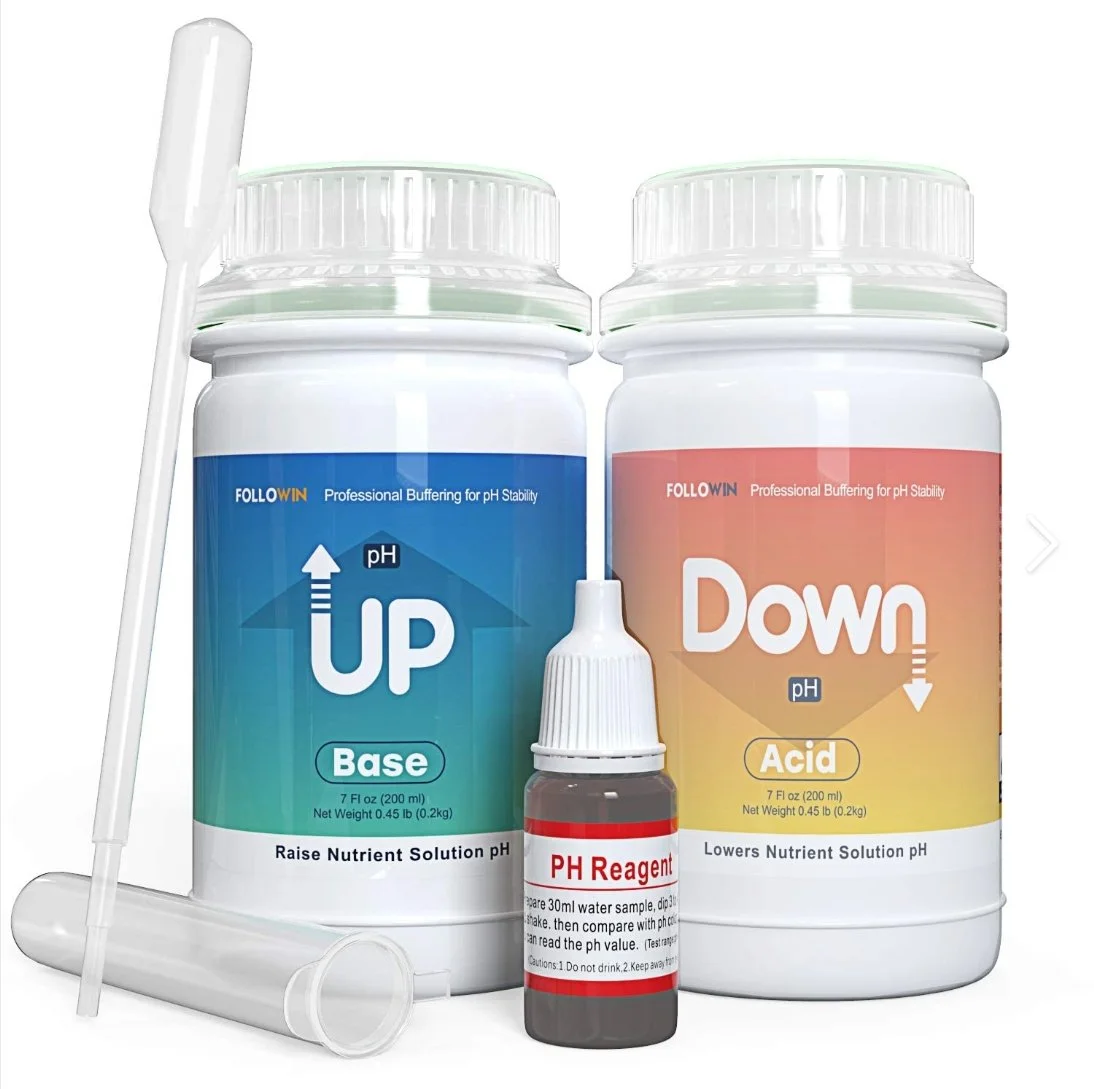
1. pH Up & pH Down
The Problem with pH Up & pH Down
A huge number of beginners are either encouraged — or outright sold — pH adjusting products very early in their aquarium journey. They’re often told they need to set their pH to the middle of a species’ range, or even worse, that “neutral” pH 7.0 is the correct water for everything.
Many new keepers don’t yet realise that different fish and shrimp come from completely different environments around the world, all with naturally different water parameters. Amazonian species, African cichlids, Southeast Asian shrimp — they are not designed for the same water chemistry.
But instead of being guided toward livestock that suits their natural tap water, beginners are often sold bottles to “correct” it.
The issue is this: someone who doesn’t yet fully understand the nitrogen cycle, KH, buffering capacity, or how biological filtration works should not be pressured into chemically adjusting pH. These products are rarely explained properly. Customers are told what they do — but not how they work, or what can go wrong.
Most beginners use them with good intentions. They genuinely believe they are doing the right thing.
A very common pattern looks like this:
They fill the tank and adjust the pH.
They do a water change.
They refill with fresh tap water (which returns to the original pH).
They add more pH adjuster to “fix” it again.
Every water change becomes a dramatic chemical swing — first diluting the water back toward its natural state, then spiking it back up or down to whatever number they believe is “correct.”
Those swings are far more dangerous than the original parameter ever was.
Stability is always more important than perfection.
Fish and shrimp most commonly die from instability — not from water that sits slightly on the high or low end of their range. In many cases, they can even tolerate parameters slightly outside their listed range, provided those conditions remain consistent.
Constant fluctuation stresses their osmoregulatory systems, weakens immunity, impacts moulting in shrimp, and increases susceptibility to disease.
Another factor many people don’t consider: the “ideal wild conditions” listed online are not necessarily what your fish or shrimp were bred in. Most aquarium livestock today is commercially bred, often for generations, in controlled systems that may look very different from their natural habitat. They are adapted to stable captive conditions — not fluctuating chemistry.
The smarter approach for most beginners is simple:
Choose species that already suit your tap water, and keep it consistent.
A stable tank that runs slightly outside a textbook range will outperform a constantly adjusted “perfect” tank every single time.
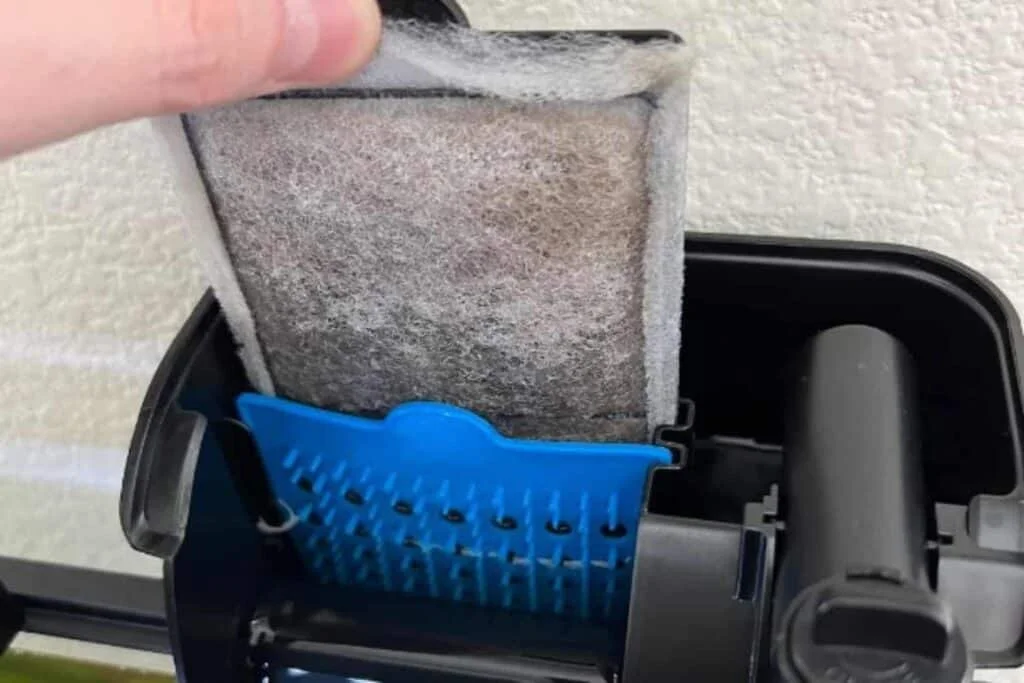
2. Carbon & Replaceable Filter Cartridges: One of the Biggest Scams in Fishkeeping
If there’s one thing in fishkeeping that comes close to the old myth that “fish only grow to the size of the tank,” it’s being told you need to replace your filter cartridges on a hob filter every month.
At first glance, it sounds responsible — “keep your filter clean, keep your tank healthy.” But here’s the reality: every time you toss out a cartridge, you’re resetting the biological system in your tank. You’re literally shocking and destabilising your water every single time.
You think you’re doing the right thing, but in reality, you’re stressing your fish and shrimp without even knowing it.
If you want a properly stable tank, here’s what I recommend:
Switch to a hang-on-back filter and use your own sponges or biological media instead of disposable cartridges. A sponge works just as well at maintaining a healthy bacterial colony.
If you do want to use carbon, buy bulk containers of it — either online or in-store — and place it in a reusable media bag. You don’t need to constantly replace the whole filter just the little bits of carbon.
Most aquariums don’t actually need carbon at all. Sure, it can help “polish” water, but for the majority of tanks it’s unnecessary. For over nine years of keeping aquariums, I didn’t find a need for it until I set up a very large, high-profile display tank. Even then, carbon was optional — not essential.
The takeaway? Maintaining biological stability is far more important than following a cartridge schedule or reaching for carbon. Once you understand that, your tank will run smoother, your livestock will be healthier, and you’ll save a lot of money along the way.
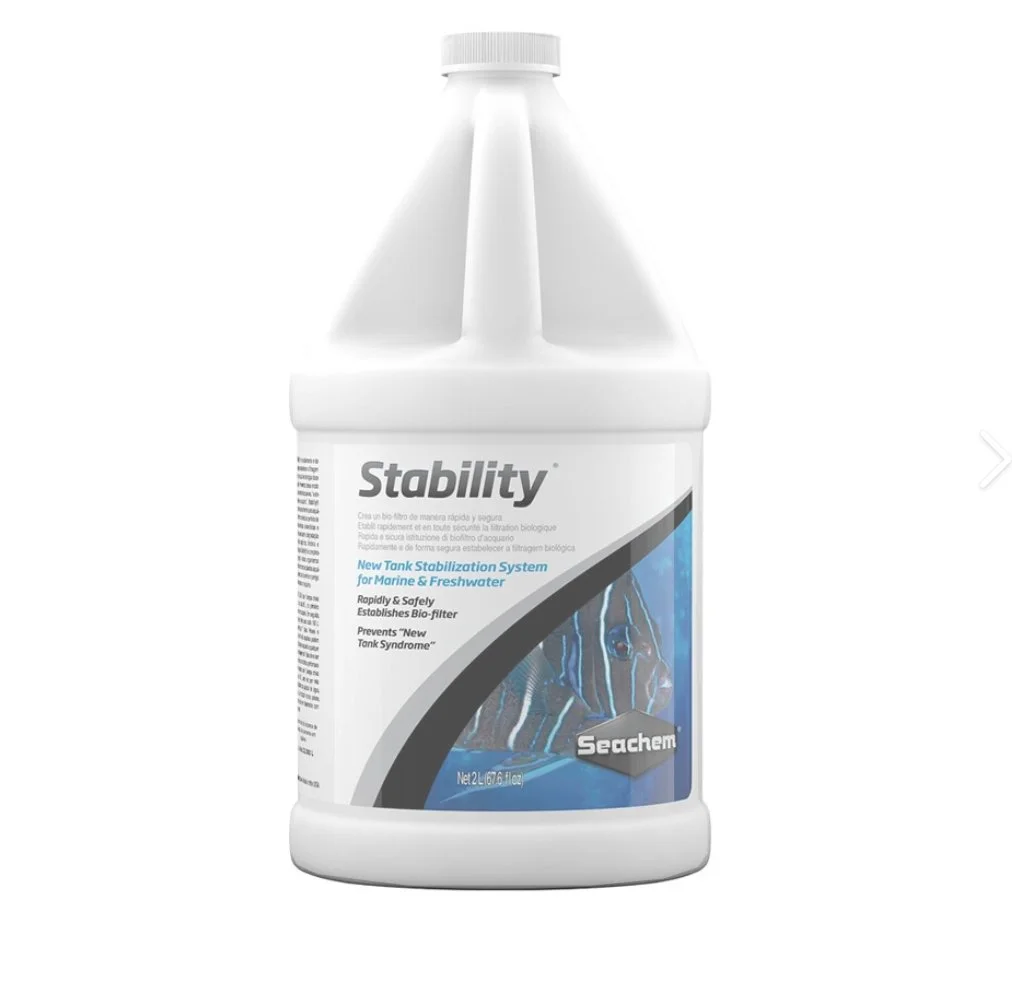
3. Bottled “Instant Cycle” Products
One of the biggest misconceptions in modern fishkeeping comes from bottled “instant cycle” products.
They’ve created the belief that cycling is as simple as: add bacteria, add fish, and you’re done.
But a tank that has bacteria present and a tank that is truly established are two completely different things.
The nitrogen cycle is far more complex than just introducing bottled bacteria. A mature aquarium isn’t just converting ammonia once — it has stable, well-established bacterial colonies across all surfaces, biofilm development, balanced microfauna, and the resilience to handle fluctuations in bioload without crashing.
That level of biological stability takes time.
Now, to be clear — some bottled bacteria products can assist when used alongside proper cycling methods. They aren’t completely useless. But they are not magic, and they don’t replace patience or proper seeding techniques.
I’ve used bottled bacteria in the past alongside my usual cycling methods — seeded media, mature sponge squeezes, and controlled ammonia dosing — and I honestly didn’t see any noticeable improvement compared to when I simply relied on established media alone.
If you genuinely want to “jumpstart” a tank, the most effective method is still:
Use filter media from a truly established aquarium
Run your new filter in an established tank
Squeeze out a mature sponge filter into the new system
Even then, it still takes several days to a week — sometimes longer — to confirm the tank can consistently process ammonia.
When I start new tanks, I often take a properly aged, dirty sponge filter, squeeze it into the new tank, then heavily ghost feed while monitoring parameters closely. I only consider the tank ready once I see it reliably processing the ammonia source without spikes.
That’s very different from pouring in a bottle and assuming the tank is safe.
If you’re on a budget, skip the bottle and ask around. Many experienced hobbyists or local breeders are more than happy to:
Seed your filter in their tank for a while
Give you established media
Or squeeze out a sponge filter into a bucket for you
Building connections in the hobby will often do far more for your success than anything sold on a shelf.
Biological maturity can’t be rushed — and it certainly can’t be bottled.
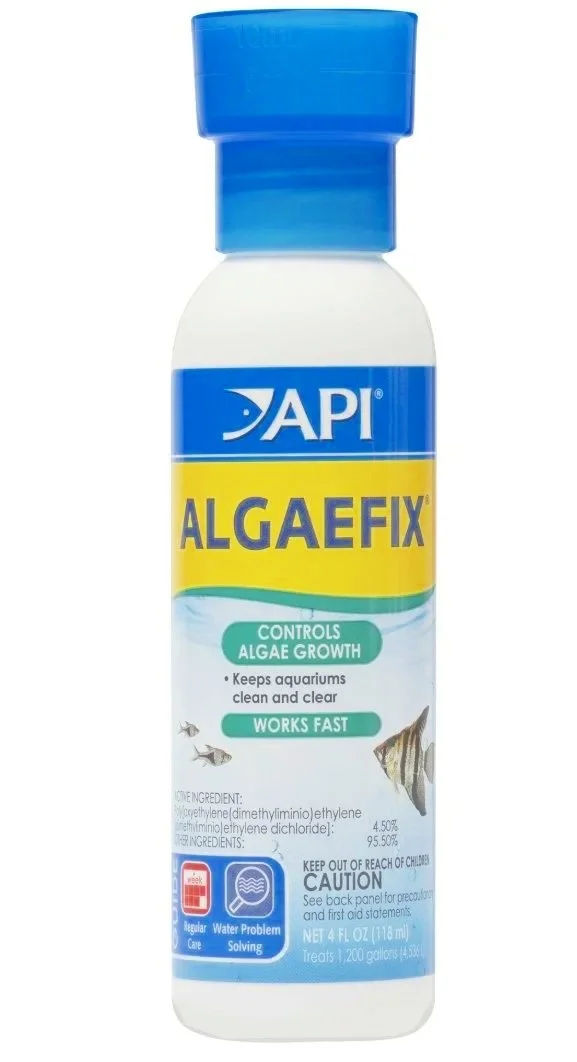
4. Algae Fixes & “Cures”
Algae is one of the most misunderstood things in the aquarium hobby.
It’s often treated like a disease — something dirty, dangerous, or harmful that needs to be eliminated immediately.
But algae itself is not the problem.
Algae is an indicator.
It’s your tank telling you that something is happening biologically. It can sometimes be unsightly, yes — but on its own, algae is not harmful. In fact, in many situations, it can actually be beneficial.
The real danger comes when we ask: Why is there algae?
Algae commonly appears because of:
Ammonia present in the system
Excess nitrates
Too much light
Nutrient imbalance
An immature or unstable tank
If ammonia or nitrates are elevated, algae may actually be helping you by consuming those nutrients before they reach more toxic levels. It might look ugly — but in some cases, it’s acting as a buffer that’s protecting your livestock.
If the cause is excess light, especially in low-tech or breeding setups, the algae may simply be cosmetic. Extra light — particularly natural sunlight — can trigger algae growth without harming fish or shrimp at all.
In shrimp and fry grow-out tanks, light-driven algae can even be beneficial. Biofilm and algae provide constant grazing surfaces for shrimplets and fish fry. In many breeding systems, a bit of algae growth is a sign of a productive, food-rich environment.
Where people go wrong is reaching for an “algae fix” product that promises to clear it instantly.
These products kill what you see — but they do not fix the underlying cause. If the imbalance remains, the algae will return. And you’ll find yourself in a cycle of repeatedly dosing chemicals, stressing your tank, and spending money — all without solving the real issue.
Algae treatments often mask symptoms instead of correcting the imbalance behind them.
Instead of asking, “How do I kill this?”
Ask, “Why is it here?”
Is your lighting period too long?
Are you overfeeding?
Is the tank newly established.
Are nutrients out of balance?
And in breeding setups with heavy lighting or natural light exposure — consider whether you actually need to remove it at all. If it’s supporting shrimplets, fry, and biofilm growth, it may be doing more good than harm.
Algae is not the enemy. Instability and imbalance are.
Killing the symptom without fixing the cause just guarantees you’ll keep buying the cure.
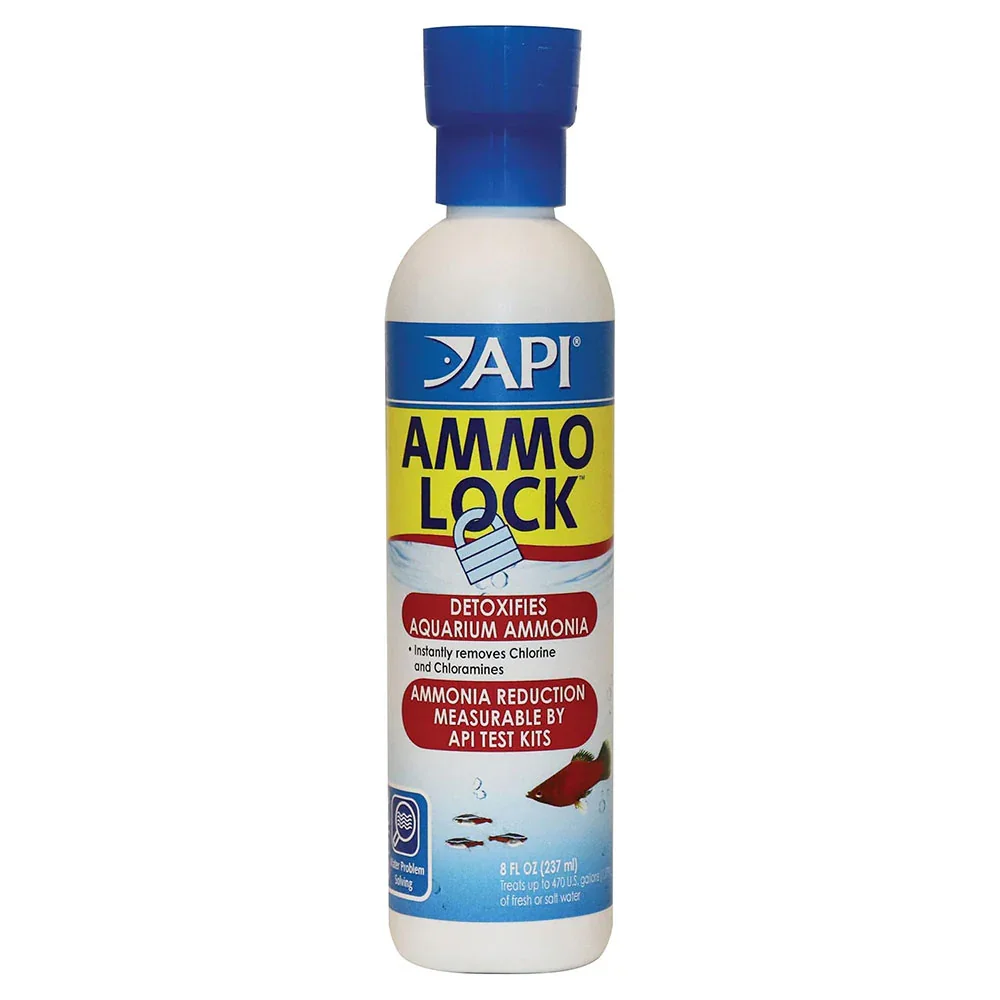
5. Ammonia “Fixing” or “Curing” Products
Ammonia detoxifiers are often marketed as emergency lifesavers — products that instantly make ammonia “safe” and protect your fish or shrimp.
And while some of these products can temporarily bind ammonia into a less toxic form, they do not remove it from your system. They do not eliminate the source. And they absolutely do not replace proper biological filtration.
Ammonia doesn’t appear out of nowhere. It’s a symptom.
It’s usually caused by:
An uncycled or immature tank
Overstocking
Overfeeding
Dead organic matter breaking down
Inadequate filtration
Dosing a product to “neutralise” ammonia without addressing the root cause is like covering a warning light on your dashboard instead of fixing the engine.
In some emergency situations, these products can buy you time — but they are not a solution. When used repeatedly as a crutch, they often delay proper corrective action and create ongoing instability.
In shrimp tanks especially, constant reactive dosing can cause subtle parameter swings that stress moulting cycles and weaken shrimp over time. Shrimp are extremely sensitive to instability. Repeated chemical intervention can sometimes do more long-term harm than the original ammonia spike.
Here’s the simple truth:
The only real way to fix ammonia is to remove it — and fix the cause.
That means:
Performing appropriate water changes
Reducing feeding
Removing excess waste
Ensuring your tank is properly cycled
Strengthening biological filtration
No bottle replaces established bacteria. No chemical shortcut replaces stability.
If ammonia is present, something in the system is not balanced yet. Fix the imbalance, and the ammonia problem resolves itself.
That being said, I do keep an ammonia-detoxifying water conditioner on hand — not because I rely on it, but because emergencies happen. In the unfortunate event of a tank crash, it can be helpful to dose temporarily while preparing to do a proper water change. I also find it useful when drip acclimating shrimp; once the bag is opened, adding a detoxifier can offer an extra layer of protection during the transition. If fish are showing signs of ammonia stress and I’m not home, it’s something a family member or housemate can safely add until I return to perform a proper water change — especially if I don’t trust them to handle the water change itself. It’s a backup tool, not a primary solution. I usually have Seachem Prime on hand or Fritz Complete.
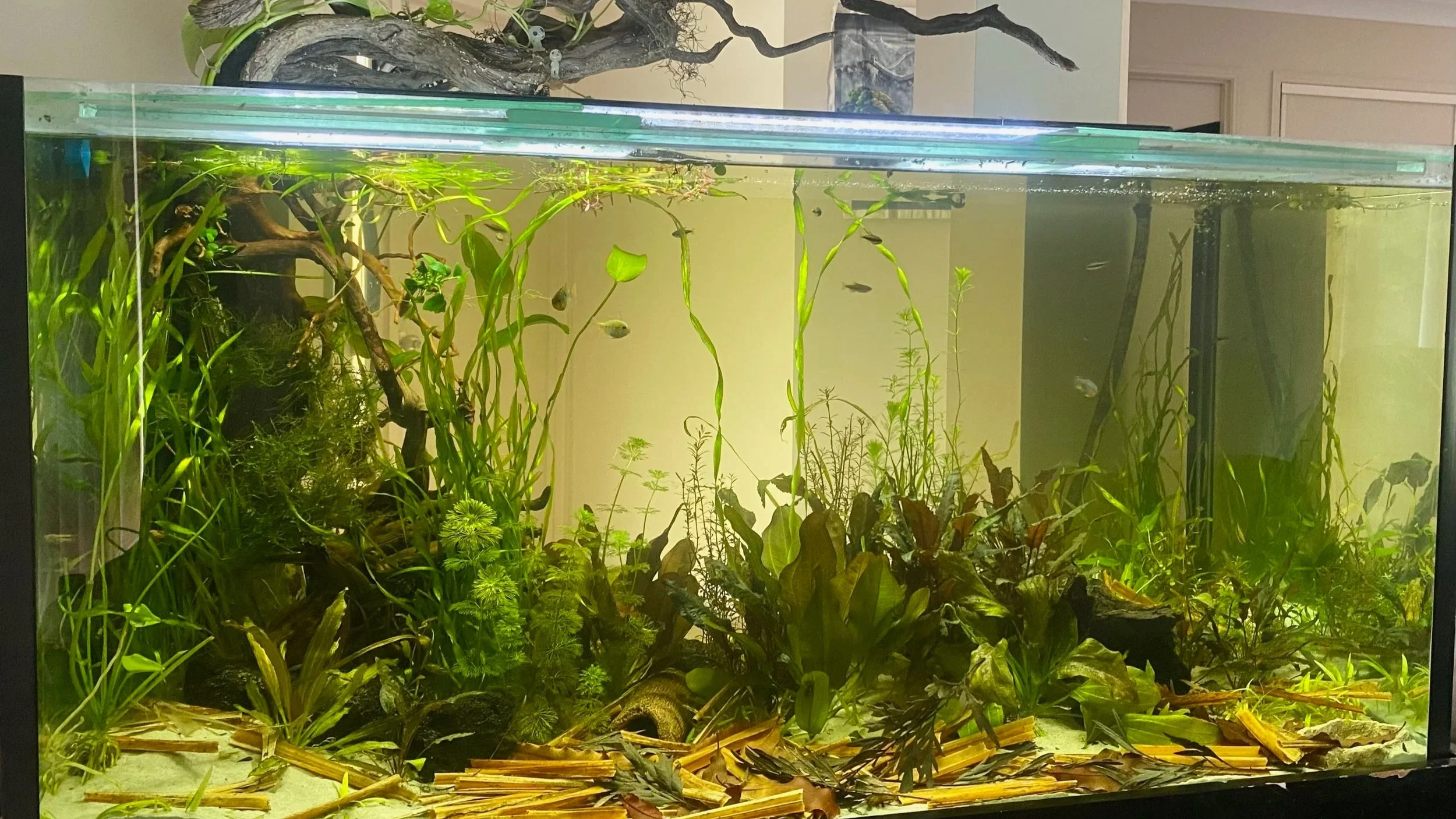
My Personal Display Tank - the plants here are all cheap easy ones I swear by. They allow you to solely focus on your fish without worrying and messing with the plants more than looking after your fish to get some for yourself click the image.
The Real Secret
The healthiest aquariums aren’t built with quick-fix bottles or miracle products. They’re built on solid foundations — and the basics are way more important than any flashy supplement on a shelf.
A thriving tank relies on:
Stability – the single most important factor. Fish and shrimp cope much better with water that’s slightly off the “ideal” numbers than water that swings wildly.
Proper cycling – your tank needs a fully established biological filtration system. Skipping this step or relying on a bottle won’t create a mature system.
Patience – nothing worth keeping happens overnight. Your tank, your plants, and your shrimp all need time to adapt and grow.
Appropriate stocking – don’t overcrowd. Even the best filtration can’t magically handle too many animals.
Consistent maintenance – regular water changes, monitoring, and feeding responsibly are the things that actually keep your livestock alive and healthy.
One thing I’ve learned over years of breeding shrimp and keeping tanks: the best aquariums are the ones that try to mimic nature. The closer your tank is to the environment your livestock evolved in — the lighting, the water flow, the plants, the substrate, and even the microfauna — the healthier and happier your animals will be. You don’t need chemicals or shortcuts to recreate nature; you just need to understand it and work with it.
Quick fixes sell well because they make you feel like you have control. But in reality, they often mask problems and create instability. A “perfect” parameter achieved chemically and constantly adjusted isn’t better — it’s usually worse.
In shrimp keeping especially, instability is the real killer. Shrimp may tolerate water slightly outside their listed ranges, but they can’t handle constant fluctuations caused by overreacting to every little change. A tank that’s allowed to settle and mature, with consistent care and a strong foundation, will always outperform one that’s being chemically corrected or “fixed” with every water change.
At the end of the day, stability isn’t just important. It’s everything.
If your goal is a thriving, long-term aquarium — whether it’s a planted tank, a shrimp colony, or a community setup — focus on understanding your system and working with it, not against it. Build tanks that mimic nature as closely as possible, and your livestock will reward you with health, colour, and longevity. That’s where real success comes from.
