
The Most Underrated Pollinator Plant for Australian Gardens: Why Moonflowers Belong in Every Moon Garden
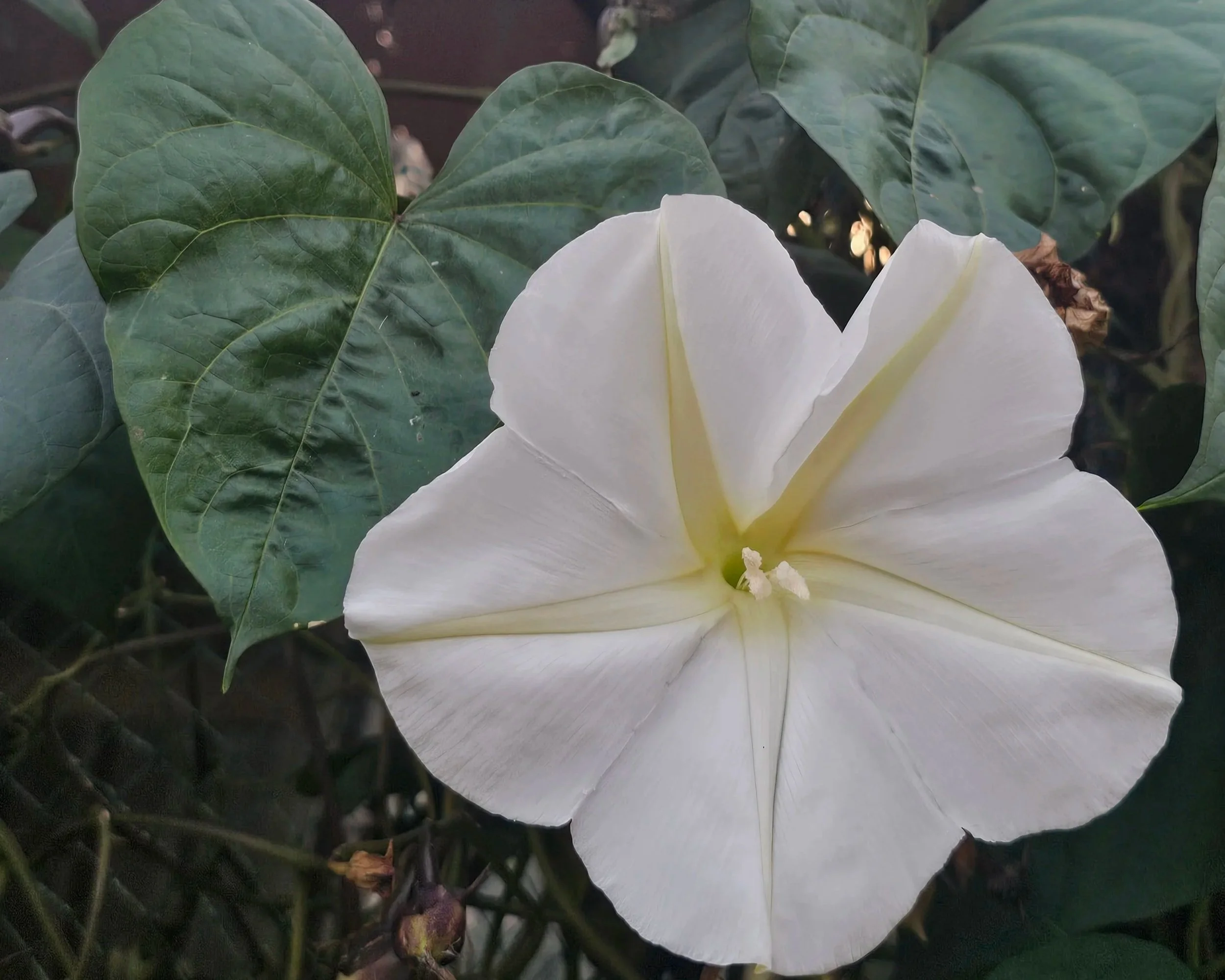
Moonflowers (Ipomoea alba) are one of my absolute favourite plants to grow.
There's something genuinely magical about a plant that waits all day before putting on its show. While most flowers are winding down for the evening, Moonflowers are just getting started. Their huge white blooms begin opening in the late afternoon and continue unfurling into the evening, releasing a beautiful fragrance that fills the garden throughout the night.
By morning, the flowers have finished their display and begin to wither away, but with new blooms opening every evening, the show continues night after night.
The first thing that attracted me to Moonflowers wasn't actually their fragrance. What caught my attention was how unique they are. Most flowers bloom during the day, but Moonflowers seem to have their own schedule. Watching the large white blooms slowly unfurl as the sun goes down is something I never get tired of. Combined with their huge heart-shaped leaves, they're a genuinely beautiful plant even before they flower.
They're also one of those plants that I think almost anyone can grow. You don't need a huge garden. If you have room for a large pot, a fence line, a trellis, an archway, or even the outside of a chicken coop, you can probably find somewhere to grow a Moonflower.
A Beautiful Addition to Moon Gardens
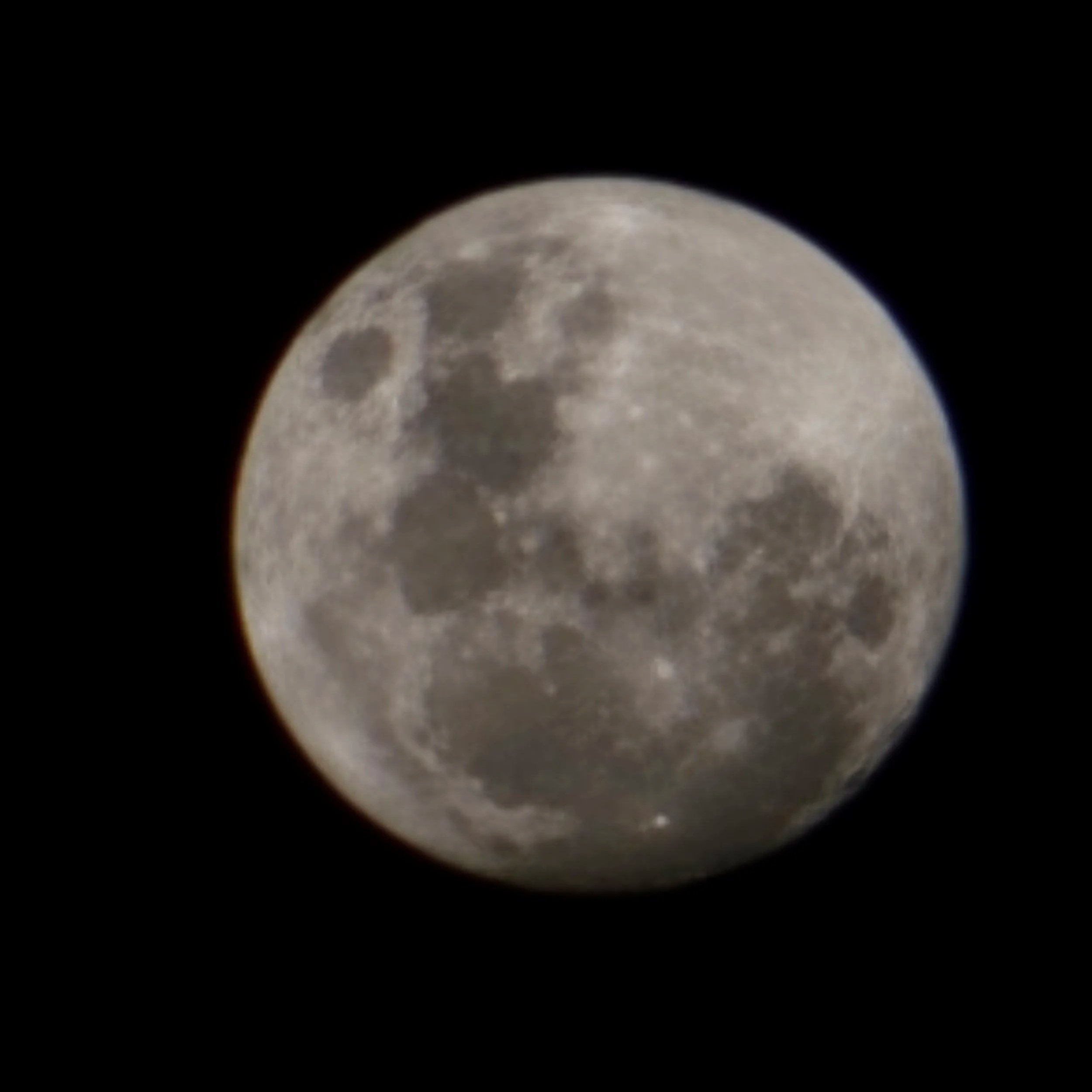
Moonflowers are one of the most popular plants for moon gardens because they offer everything you could want in a nighttime garden plant:
Brilliant white blooms that seem to glow in the moonlight
A sweet evening fragrance
Fast-growing vines that quickly cover vertical spaces
Whether grown on a pergola, fence, archway, or near an outdoor entertaining area, Moonflowers create a peaceful atmosphere that can be enjoyed long after the sun goes down.
The Fragrance Was a Surprise
While the flowers and unusual blooming habit were what first attracted me to Moonflowers, the fragrance was something I didn't fully appreciate until I'd been growing them for a while.
One evening I walked outside and noticed this beautiful scent drifting through the garden. It took me a moment to realise it was coming from the Moonflowers.
Since then, they've become my favourite scented flower.
A lot of people compare the fragrance to jasmine, and I can understand why. Personally though, I've always found jasmine has the slightest hint of a scent that doesn't quite agree with me, and it can sometimes feel a little overpowering. Moonflowers don't have that at all for me.
The fragrance is strong enough that you can easily smell it from a distance, but somehow it still feels light, clean, fresh, and delicate at the same time. It's one of those scents that's difficult to describe properly until you've experienced it yourself.
In fact, I'd go as far as saying it's my favourite floral fragrance I've ever smelled.
Surprisingly Easy to Grow
Moonflowers are often recommended for full sun, and they certainly grow well there.
That said, I've found them to be far more adaptable than many gardening guides suggest. I've planted them in areas that receive all-day sun, as well as spots that get mostly indirect light or partial shade, and they've still performed surprisingly well.
As long as they're kept reasonably watered and have something to climb, they seem quite happy.
Some of my favourite places to grow them include:
Along fences
Over garden arches
On pergolas
Around outdoor seating areas
Along chicken runs and coops
In large pots with a trellis
The large heart-shaped leaves create a lovely tropical look while also providing useful shade during the warmer months. This is one reason I particularly like growing them around chicken areas, where the foliage can help create cooler spots while still allowing plenty of airflow.
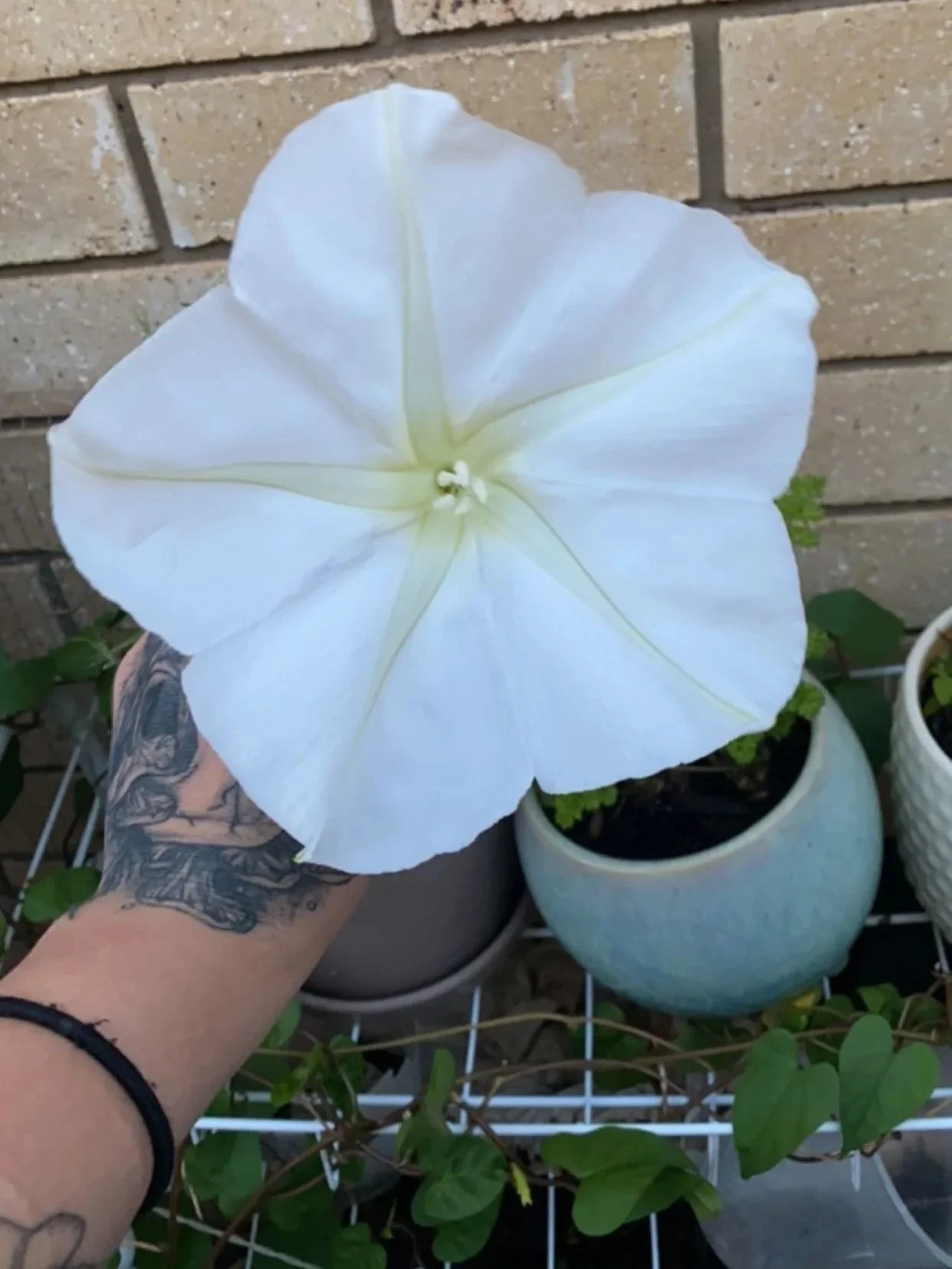
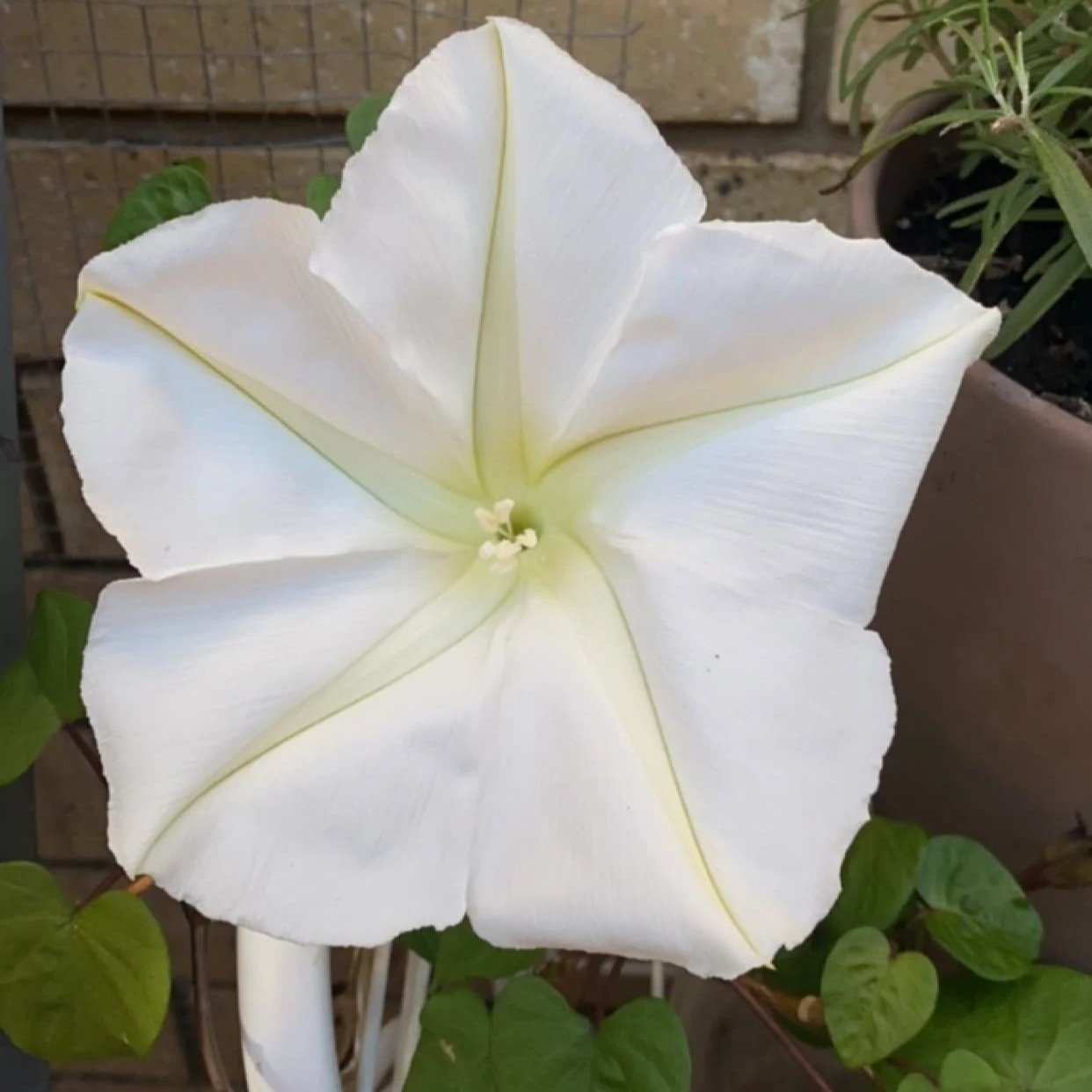
Here I grew it in a little pot and used a white shoe rack from kmart as my herb stand and trellis for the Moonflower. You can see how even trimmed to stay small the flowers are massive.
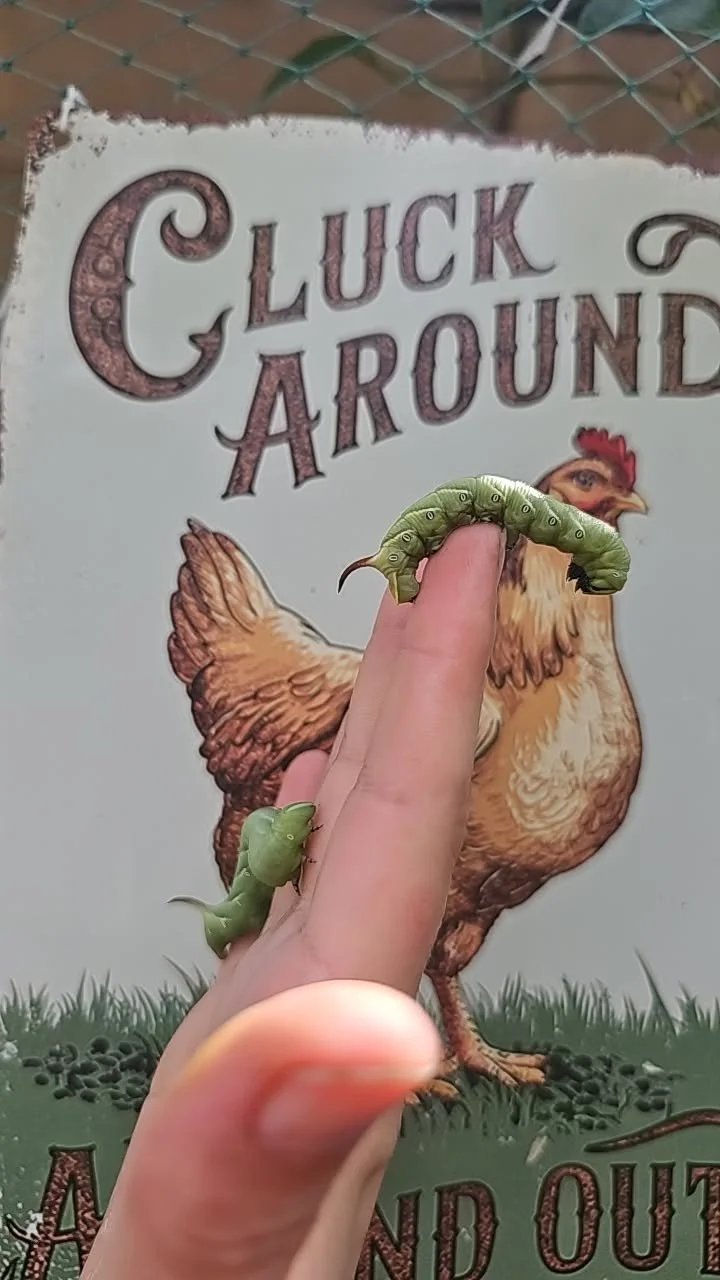
Some chunky Hawkmoth caterpillars who used my moonflower as their food plant.
A Fantastic Plant for Wildlife
One of the things I appreciate most about Moonflowers is how much life they bring into the garden.
Ipomoea alba is native to tropical and subtropical regions of the Americas. In its native range, the flowers evolved to attract nocturnal pollinators, and they do an incredible job of it.
The large white blooms and powerful evening fragrance are perfectly designed for hawk moths and other night-flying moth species. If you've ever seen a hawk moth hovering around flowers at dusk, you'll know they're often compared to tiny hummingbirds because of the way they fly.
In parts of their native range, Moonflowers are also visited by nectar-feeding bats. The flowers open at exactly the right time, produce plenty of nectar, and are easy for these nighttime pollinators to locate thanks to their bright white colour and strong scent.
The dense foliage can also provide shelter for a variety of insects and small garden creatures. Like many members of the morning glory family, Moonflowers can act as host plants for certain caterpillar and moth species depending on your local area.
I know some gardeners aren't thrilled to find caterpillars on their plants, but personally I see them as a sign of a healthy ecosystem. Every caterpillar is future moth or butterfly food for birds, reptiles, frogs, and countless other animals that make up a thriving garden.
Many people think of Moonflowers as purely a nighttime pollinator plant, but I've also noticed activity from daytime visitors.
In the early morning, before the flowers have completely faded, and again during the late afternoon as fresh blooms begin opening, it's not unusual to see:
Native bees
Honey bees
Hoverflies
Small butterflies
Beneficial wasps
Other nectar-feeding insects
In a way, Moonflowers seem to bridge the gap between daytime and nighttime pollinators, providing food for wildlife around the clock.
If you're trying to create a wildlife-friendly garden, Moonflowers are one of those plants that quietly do far more than most people realise.
Some critters that have enjoyed my moonflowers as well as some times I thought it looked nice.
A Plant With More History Than I Expected
The more I learned about Moonflowers, the more interesting they became.
One thing that surprised me was discovering that they're used for more than just looking beautiful in the garden.
In some parts of Asia, the unopened flower buds, young leaves, and flower parts are traditionally harvested and eaten. They're used in a variety of dishes including stir-fries, curries, soups, and vegetable dishes. I haven't personally tried eating them, but it's fascinating that a plant most people think of purely as an ornamental flower is also considered a food plant in some cultures.
Then I fell down a bit of a rabbit hole reading about their traditional medicinal uses.
Various species within the Ipomoea genus have been used in traditional medicine for hundreds of years. Depending on the species and region, they've been used for constipation, digestive issues, inflammation, diabetes, wound care, and a variety of other ailments.
Modern researchers have also investigated compounds found within Ipomoea species for antioxidant, anti-inflammatory, antimicrobial, and potential anticancer properties. It's important to note that much of this research is still ongoing, and none of this should be taken as medical advice or a recommendation to self-treat any condition.
The fact that researchers continue studying these plants does show just how chemically interesting the genus is.
The one use that made me laugh the most was discovering that Moonflower has a history of being used as a traditional remedy for snake bites.
As someone who absolutely loves snakes, I found it hilarious that my favourite flower apparently has a reputation for being used against them.
That said, this definitely falls into the category of "interesting historical fact" rather than "something you should try yourself." If you're bitten by a snake, please seek proper medical treatment immediately and leave the Moonflowers in the garden where they belong.
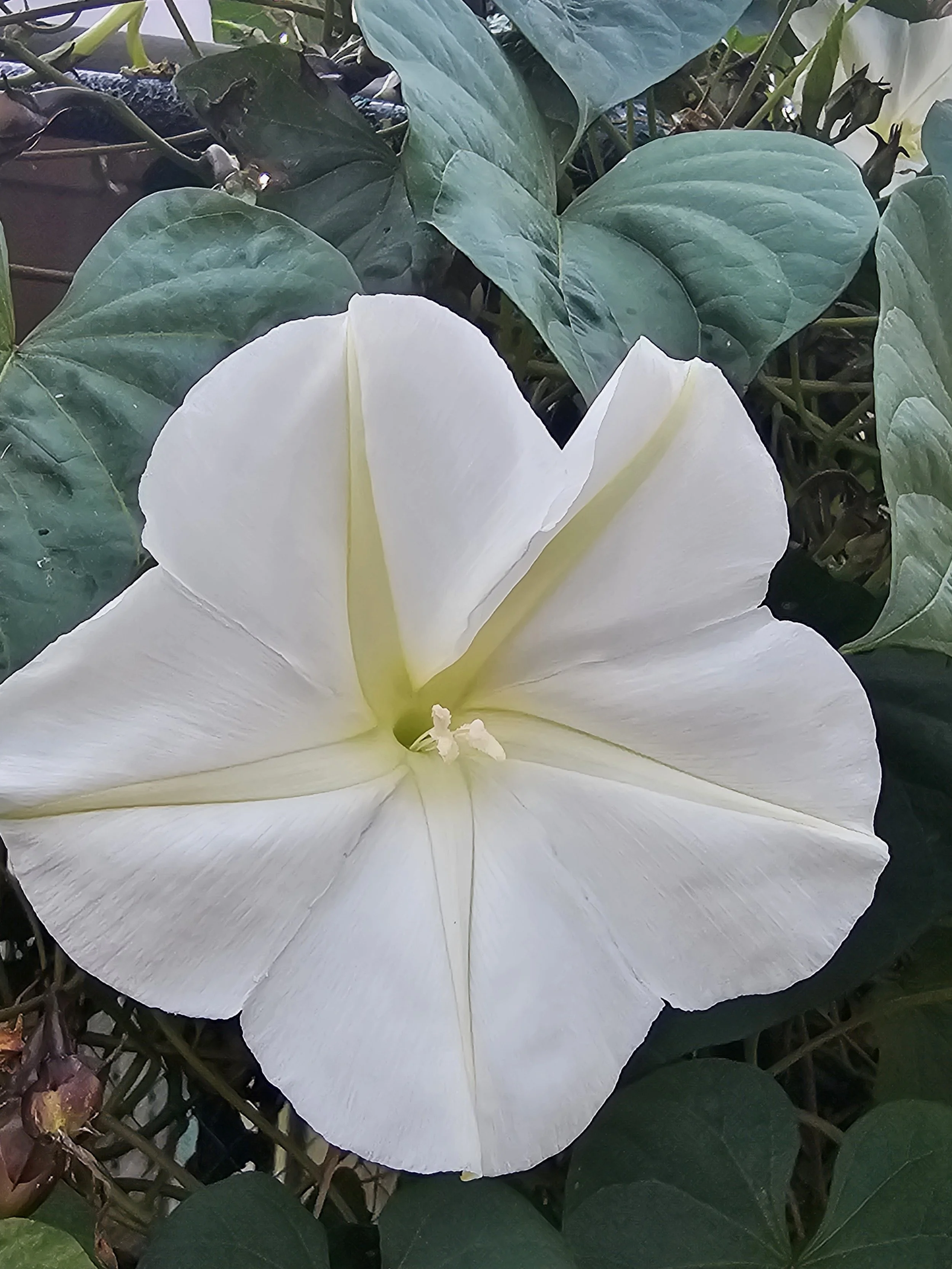
If you have fallen in love with this plant like I have click this image to tak you to where you can get some seeds for your own garden.
Why I Recommend Them
There are plenty of beautiful flowering vines out there, but Moonflowers offer something genuinely different.
The huge white blooms, the heart-shaped foliage, the unusual night-blooming habit, the incredible fragrance, and the wildlife they support all combine to create a plant that feels a little bit magical.
Whether you have a large backyard, a small courtyard, or simply a pot with a trellis, I think Moonflowers are worth trying at least once.
Just be warned—you may find yourself heading outside every evening to check whether the next flower has opened yet.
I certainly do.
