
Cherry Shrimp In-Depth Care Guide: Advanced Tips for Healthy Shrimp
Introduction
This guide will explain not just what to do, but why each factor matters and what can go wrong if it isn’t maintained. Understanding the reasoning behind water parameters, filtration, feeding, and tank setup allows you to make informed decisions rather than relying on guesswork or conflicting advice online. Shrimp are incredibly rewarding to keep, but they are also sensitive to instability, sudden changes, and poor preparation — and most losses can be traced back to preventable causes.
Whether your goal is to establish a thriving, self-sustaining breeding colony or simply keep a small display tank of shrimp healthy and active, this guide will walk you through the foundations of long-term success. From achieving stable water conditions to avoiding common beginner mistakes, you’ll gain the confidence to create an environment where your shrimp don’t just survive but they flourish.
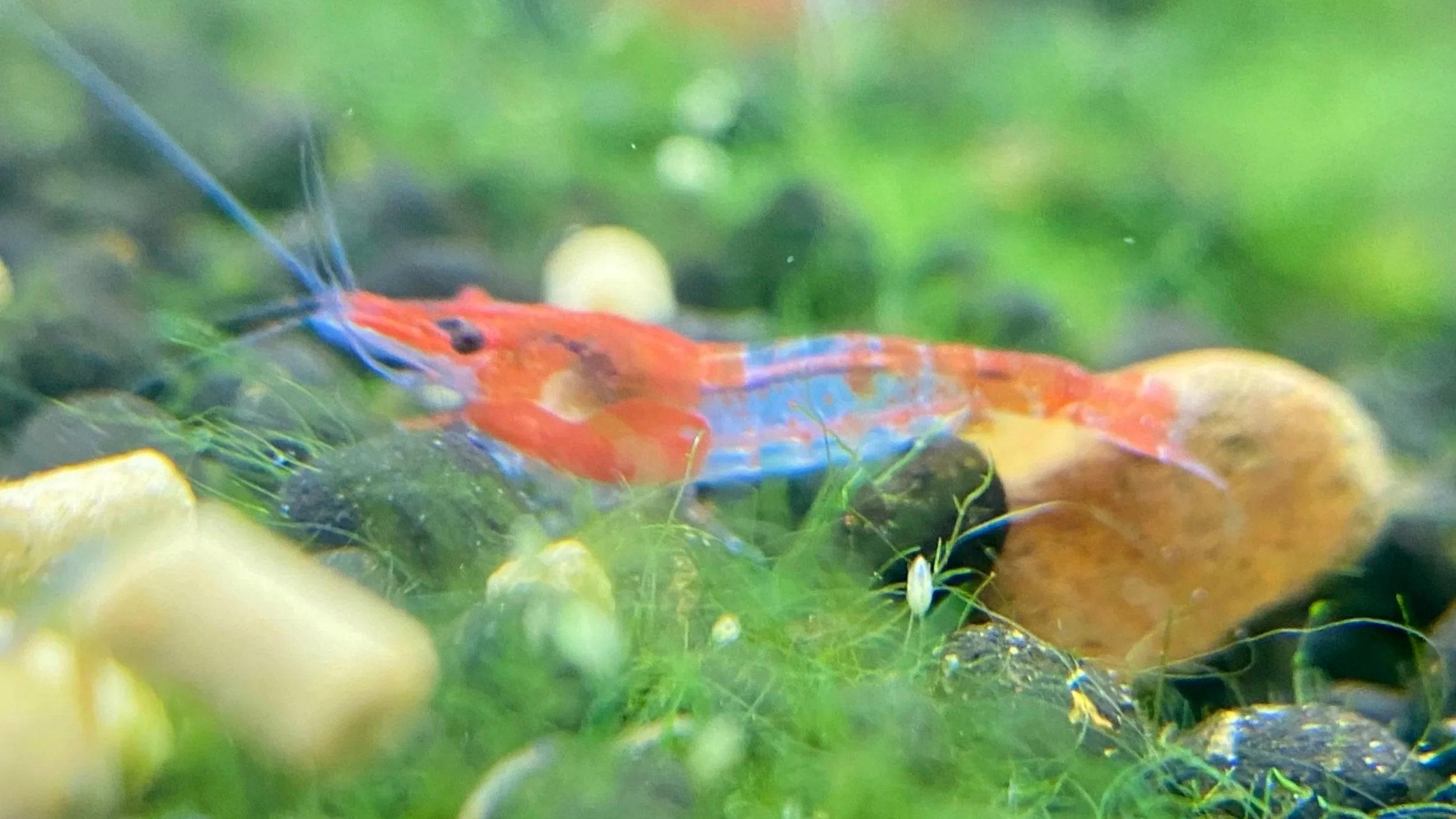
Red Rili Shrimp - Click the image to have a closer look at these guys.
Water Parameters – The Foundation of a Healthy Colony
Stable water conditions are the most critical factor for cherry shrimp health. Sudden changes in temperature, pH, GH, or KH can stress shrimp, lead to failed moults, or even cause sudden death. Each parameter has a purpose:
Temperature (20–24°C):
Why it matters: Shrimp metabolism and growth rate are directly tied to water temperature. Warmer water speeds up metabolism, leading to faster growth, more frequent moults, and accelerated feeding. Cooler water slows metabolism, extending lifespan and reducing reproduction.
Goal-based advice:
For larger colonies or fast growth: Higher temps (~24°C) are ideal for shrimp to mature quickly and grow rapidly. This is great for breeders or anyone wanting lots of shrimp, but it also means they won’t live as long and require more maintenance.
For pet colonies or longevity: Lower temps (~20–21°C) slow reproduction and let shrimp live longer. You’ll have a more manageable colony and don’t need to constantly find homes for new shrimp — though they’re popular and easy to rehome if you do.
pH (6.6–7.6):
Why it matters: Affects mineral absorption and exoskeleton strength. Stability is more important than an exact number.
If pH is off: Shrimp may struggle to moult properly, lose colour, or die.
GH – General Hardness (4–8):
Supplies calcium and magnesium for healthy moulting and growth.
Too low: Leads to weak shells, failed moults, and higher mortality.
KH – Carbonate Hardness (2–6):
Buffers pH to prevent swings.
Too low: pH fluctuations can stress shrimp and reduce survival.
TDS – Total Dissolved Solids:
TDS is simply a measure of how many dissolved substances are in the water — this could be minerals, fertilisers, or even waste. For cherry shrimp, TDS isn’t critical as long as your GH, KH, and pH are stable.
It becomes more relevant for picky shrimp like Caridina species, which often require reverse osmosis (RO) water. With RO water, almost everything is stripped from the water, so hobbyists must re-mineralise carefully to provide the right GH/KH/TDS for shrimp health. Cherry shrimp are far less demanding and will thrive in typical tap water that meets the other parameters.
Ammonia/Nitrite: Always 0 — even small amounts are toxic.
Nitrate: Keep under 20ppm — high nitrate reduces health, colour, and breeding success.
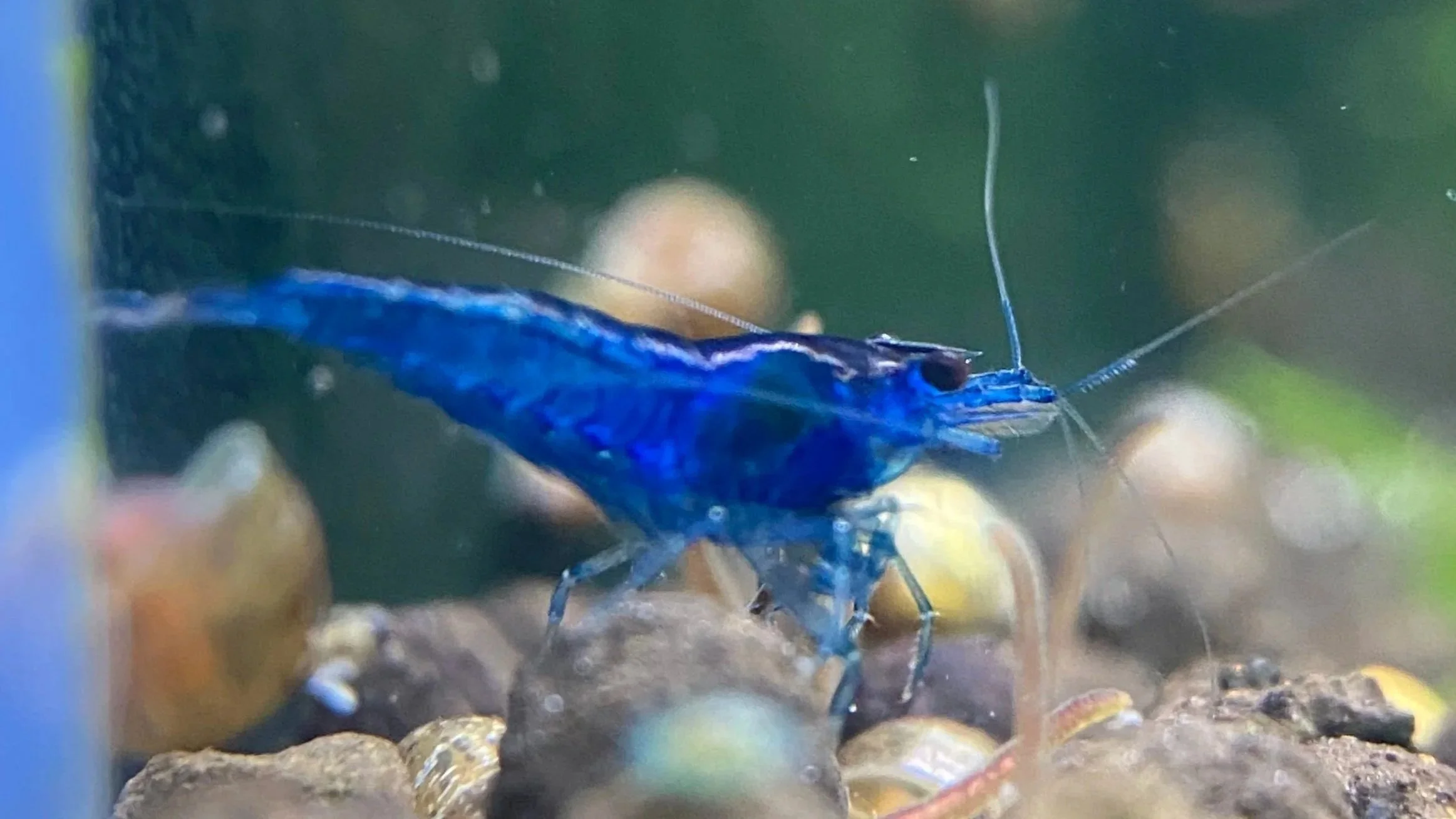
Blue Dream Cherry Shrimp - Click the image to take a closer look at these guys.
Tank Setup & Filtration – Creating a Stable Home
A healthy tank environment is essential for thriving colonies, but more importantly, stability is the true key to success — especially in shrimp tanks. While ideal parameter ranges are helpful as a guide, shrimp cope far better with water that is consistently a little high or a little low than water that is constantly fluctuating. In some cases, slightly out-of-range parameters can be perfectly manageable for certain species — provided they remain stable. One of the biggest mistakes aquarists make is chasing “perfect” numbers, frequently adjusting pH, GH, or KH with products like pH up and pH down without fully understanding how they work. These constant chemical adjustments cause swings in water chemistry, which stress shrimp and can ultimately harm or kill livestock — even when the intention is simply to care for them properly. Consistency, patience, and gradual adjustments will always outperform quick fixes.
Filtration:
Sponge filters are perfect: gentle flow, shrimp-safe, and provide massive surface area for beneficial bacteria.
Bonus: Sponge filters also double as a food source — they trap “yucky” stuff and develop biofilm that shrimp love to graze on, helping baby shrimp hatch and grow.
HOB/internal filters can work if you add a pre-filter sponge.
Plants & Hiding Places:
Dense plant coverage is critical for grazing, hiding, and stability.
Stem plants like Milfoil grow fast, use up excess nutrients, and provide lots of grazing surfaces.
Frogbit also grows quickly, consumes extra nutrients, and adds hiding spots and grazing areas for shrimp.
Together, stem plants and Frogbit create a dynamic, thriving environment far better than slow-growing plants like Java Ferns.
Leaf litter (like Indian almond leaves) adds biofilm and tannins, which shrimp love.
Biofilm & Microorganisms:
Biofilm is the primary food for baby shrimp.
Wood, moss, and leaf litter help biofilm thrive, supporting strong colonies.
Without biofilm: Shrimp, especially babies, can starve and colonies fail to thrive.
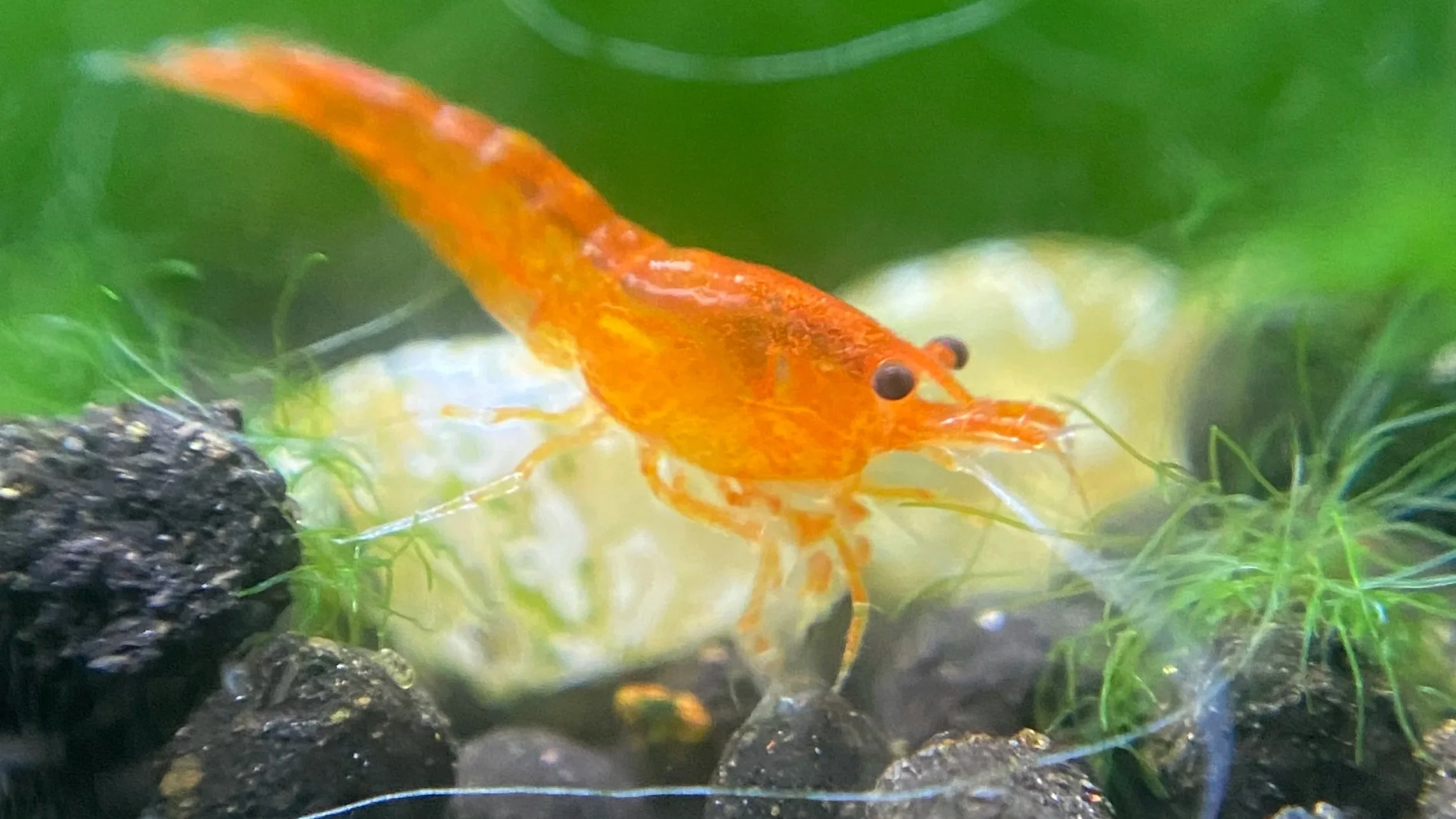
Sunkist cherry shrimp - click on the image to get a closer look
Feeding Cherry Shrimp – Variety & Supplements
Cherry shrimp are omnivorous grazers. A varied diet supports colour, growth, and moulting.
Recommended diet:
High-quality shrimp pellets
Blanched vegetables like zucchini and carrot
Occasional protein or algae wafers
Moringa powder: I give this regularly to pregnant females and newly hatched shrimp to boost survival rates and support vulnerable shrimplets.
Feeding tips:
Feed small portions 2–3 times per week to prevent overfeeding.
Remove uneaten food to maintain water quality.
Moulting & Health – Minerals & Stability Are Key
Moulting is critical for growth. Minerals (GH) and stable water are essential.
Tips for healthy moults:
Keep GH stable and provide calcium-rich surfaces or foods.
Avoid sudden water changes during moulting periods.
Signs of healthy shrimp: grazing, bright colour, calm swimming, hiding briefly during moults.
Signs of stress: lethargy, colour fading, hiding excessively, dying post-moult.

Red Cherry Shrimp - click on he image to see how to add these to your own tanks or have a closer look
Recommended Tank Setup – How I Do It
Here’s how I personally set up my tanks for the most success:
Tank size: 20L or larger
Substrate: Aquasoil capped with sand
Why I use this setup:
Aquasoil feeds plants, helping them grow fast — which in turn stabilises the tank, produces biofilm, and creates lots of hiding spots.
Fast-growing stem plants and Frogbit use up excess nutrients, preventing algae and building more grazing areas.
Sponge filters provide gentle flow and food in the form of biofilm and trapped particles, which is especially great for baby shrimp.
Capping with sand looks nice and keeps the aquasoil in place.
The slight pH-lowering effect of aquasoil isn’t a big deal for cherry shrimp — it’s far outweighed by the benefits: plant growth, biofilm, and tank stability. This is how I set up my tanks, and I’ve had the most success with this method — healthy, thriving shrimp that grow quickly, enjoy plenty of hiding spaces, and reproduce steadily without constant stress or maintenance issues.
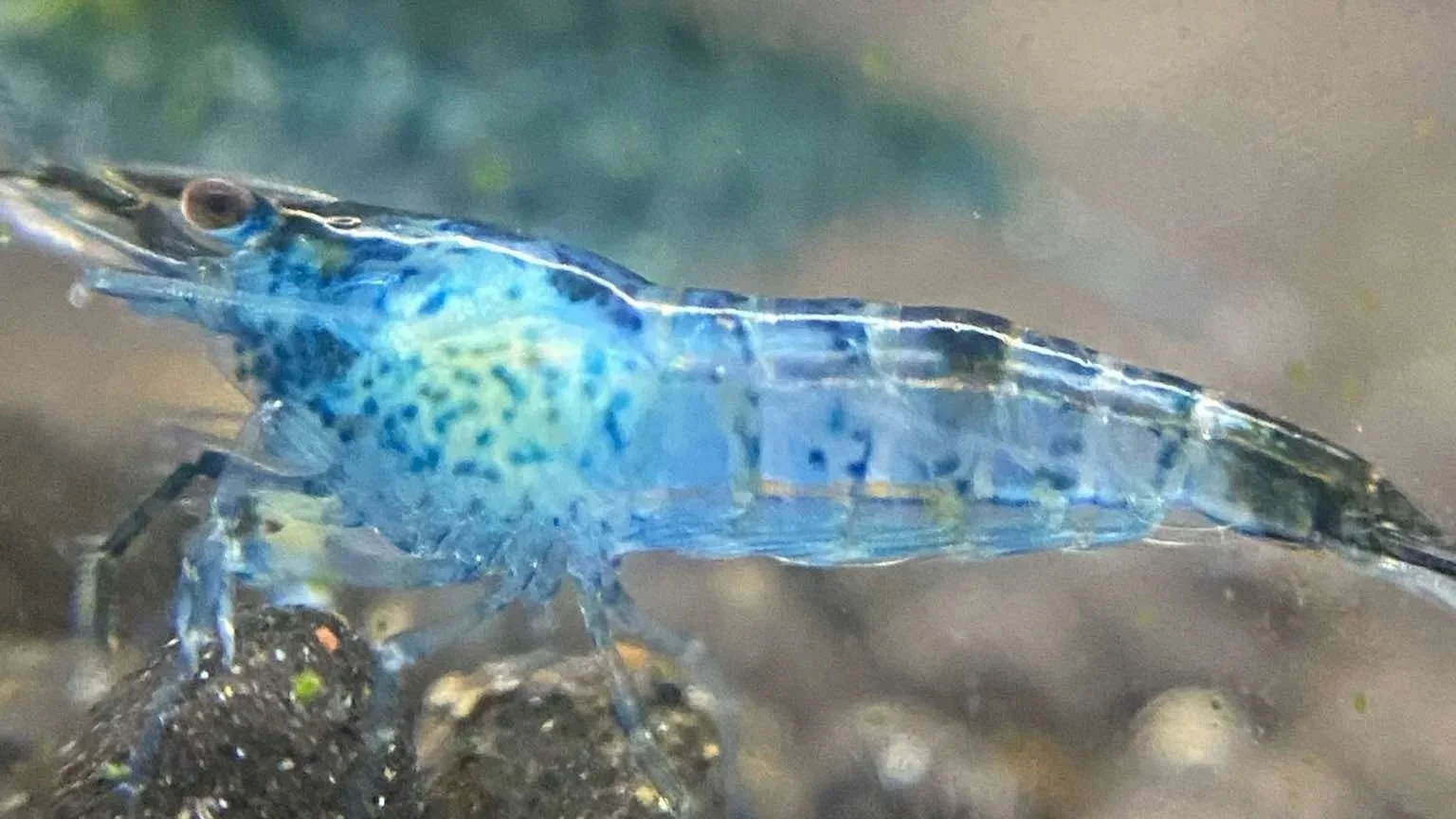
Blue Carbon Rili Cherry Shrimp - this is from the early days of this line and I have not released these guys yet.
Conclusion
Keeping cherry shrimp doesn’t have to be complicated, but understanding why each care element matters makes a huge difference. Stable water parameters, plenty of plants and hiding spots, a reliable food source, and biofilm-rich environments will keep your shrimp happy and healthy.
My approach — 20L+ tanks with aquasoil capped with sand, fast-growing stem plants, Frogbit, and sponge filtration — has consistently produced thriving colonies. By focusing on these basics and understanding the reasoning behind them, you’ll enjoy the full experience of keeping these tiny, colourful, and endlessly fascinating little critters.
I know it can be very daunting learning all this at first, and it does sound way, way more complicated than it actually is — especially if you’re new to aquarium keeping in general. Shrimp are surprisingly easy to look after, but they do require stable, healthy parameters from the start and aren’t forgiving of fluctuations. Once you understand the basics and set up a stable tank, caring for cherry shrimp becomes much more straightforward and highly rewarding.
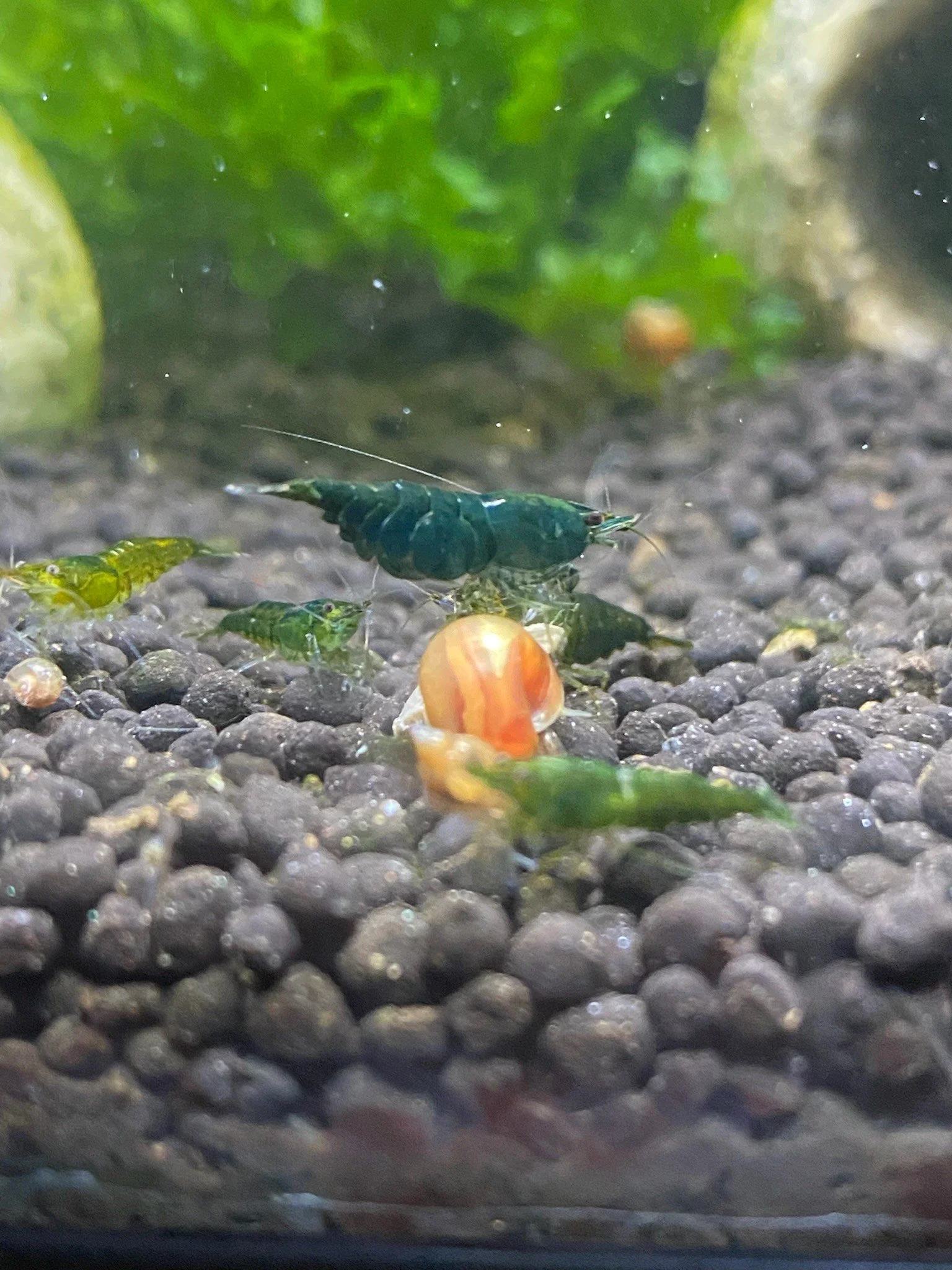
Dark green cherry shrimp this was very early in this colonies time with me - if you would like to see these close click the image
