
Titan Stick Insect Care Guide
Applies to all Titan Stick Insect (Acrophylla titan) husbandry in captivity
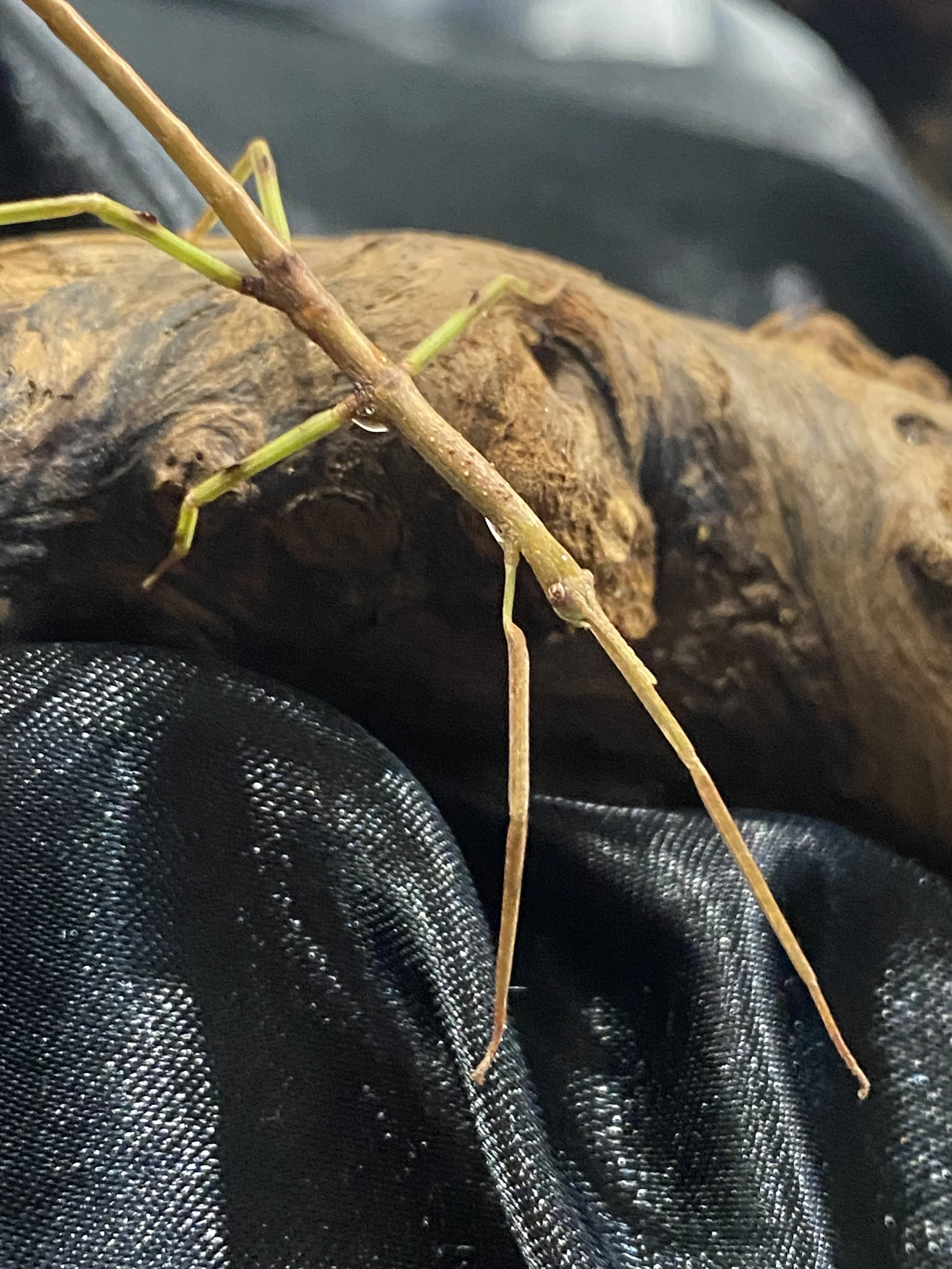
Titan Stick Insects are some of the largest and most impressive stick insects native to Australia. Known for their striking appearance and calm nature, they are a popular choice for insect enthusiasts and exotic pet hobbyists. In the wild, Titan Stick Insects inhabit forests and woodlands, feeding mainly on eucalyptus and other native leaves. Captive care focuses on replicating their natural environment, providing proper nutrition, and ensuring the right conditions for breeding.
This guide covers everything from tank setup, environmental requirements, feeding, and breeding, to help you maintain healthy, thriving stick insects.
Enclosure and Habitat Set-up
Creating a safe and comfortable environment is essential for Titan Stick Insects.
Size: Females can reach up to 35 cm, males around 25 cm. Enclosures should be a minimum of 3x the stick insect’s length in height and 2x in length and width, though bigger is always better.
They will need a jar of water for the leaves to sit in but have some form of protection so they dont drown I either drill holes into metal jar lids or coveer with fly screen and poke some holes for the leaves to go into.
Starting Small: It’s safer to start insects in smaller enclosures and move them to larger tanks as they grow.
Substrate Options:
Natural substrate like a humid dirt mix or bioactive substrate works well and encourages egg-laying, but will result in many eggs hatching.
Paper towels or puppy pads are recommended if you do not want large numbers of eggs hatching. Eggs on these surfaces must be removed and frozen to prevent accidental hatching later.
Climbing Surfaces: Include branches, spider wood, or natural sticks, ensuring they are sturdy and smooth to prevent injury.
Ventilation: Ensure proper airflow with mesh tops or side ventilation to prevent mold and fungal growth.
Humidity: Maintain 60–80% humidity, misting 1–2 times daily. Avoid water bowls or sponges as these can be dangerous and encourage mould or fungus
Environmental Requirements
Titan Stick Insects are relatively adaptable and thrive in typical household temperatures.
Temperature: 18–28°C; supplemental heating is generally not needed.
Lighting: Indirect light is sufficient; avoid direct sunlight that could overheat the insects.
Hiding Spaces: Add plants, branches, and leaves to reduce stress and provide cover.
Feeding Titan Stick Insects
Titan Stick Insects are herbivores and feed on fresh leaves.
Main Food: Eucalyptus leaves (preferably local, unsprayed).
Optional Variety: Bramble, oak, rose, raspberry, or blackberry leaves can be offered if available.
Water: Provide moisture only by misting leaves 1–2 times a day. Avoid sponges or water bowls.
Leaf Maintenance: Replace leaves once a week or as they begin to go “stale,” but before they dry out.
Breeding and Life Cycle
Titan Stick Insects have a fascinating reproductive cycle:
Parthenogenesis: Females can lay eggs that are clones of themselves; males are not strictly required for reproduction.
Recommended Males: Including males is beneficial — eggs hatch faster, genetic diversity is improved, and long-term colony health is stronger. Overseas, males have nearly gone extinct, so having at least one male is recommended.
Egg-Laying: Females can lay close to 30 eggs per day. Eggs are camouflaged and require stable, humid conditions.
Incubation: Eggs can hatch anywhere from 4 months up to 2 years depending on temperature and humidity.
Nymph Stage: Newly hatched nymphs are tiny versions of adults. Provide small leaves and low branches for climbing.
Growth to Adult: Nymphs molt multiple times over several months. Adults live 1–1.5 years with proper care.
Egg Management Tip: If you do not want eggs hatching continuously, remove eggs from the substrate and freeze them, or use paper towels/puppy pads as substrate for easier control.
Breeding Tips:
Maintain consistent humidity and temperature.
Provide plenty of climbing structures and fresh leaves.
Keep substrate clean and lightly moist.
Start young nymphs in smaller nursery enclosures if needed to reduce competition.
Invasive Potential
Titan Stick Insects (Acrophylla titan) are native to Australia, but like many exotic invertebrates, releasing them into the wild can cause ecological issues. While they are generally not considered highly invasive, it’s important to never release captive insects into local ecosystems.
Captive-bred Titan Stick Insects are adapted to your controlled environment and may not survive in the wild.
Eggs are resilient and can potentially hatch if discarded improperly, leading to accidental establishment in local areas.
Females can lay up to 30 or more eggs per day which could out compete other species native to that area.
Responsible disposal is crucial: remove eggs and freeze them before disposal, or use paper towels/puppy pads for substrate to prevent unintentional hatching.
Titan Stick Insects should be kept in secure enclosures to prevent escapes and protect both the insects and the local environment.
By following responsible husbandry practices, you can enjoy keeping these fascinating insects without contributing to ecological risks.
Final Notes
Titan Stick Insects are gentle, fascinating creatures that thrive when given a stable, naturalistic environment with fresh leaves, proper humidity, and secure climbing spaces. With good care, they grow, molt, and reproduce successfully, providing hobbyists with a long-lived, fascinating, and self-sustaining colony.
Whether you are a beginner or experienced exotic pet enthusiast, Titan Stick Insects are one of the most rewarding invertebrates to keep in Australia.
