

Mystery Snail Care Guide
Applies to all colors and varieties of Mystery Snails (Pomacea spp.)
Mystery Snails are one of the most popular freshwater snails for aquariums, admired for their vibrant shell colors, peaceful nature, and algae-eating habits. They originate from South America, where they inhabit slow-moving rivers, ponds, and wetlands with abundant vegetation. In the wild, they graze on algae, biofilm, and plant matter, which is why providing a similar environment in aquariums is key to their health and longevity.
This guide will cover tank setup, water parameters, feeding, breeding, and life cycle tips to help you maintain healthy, thriving Mystery Snails.
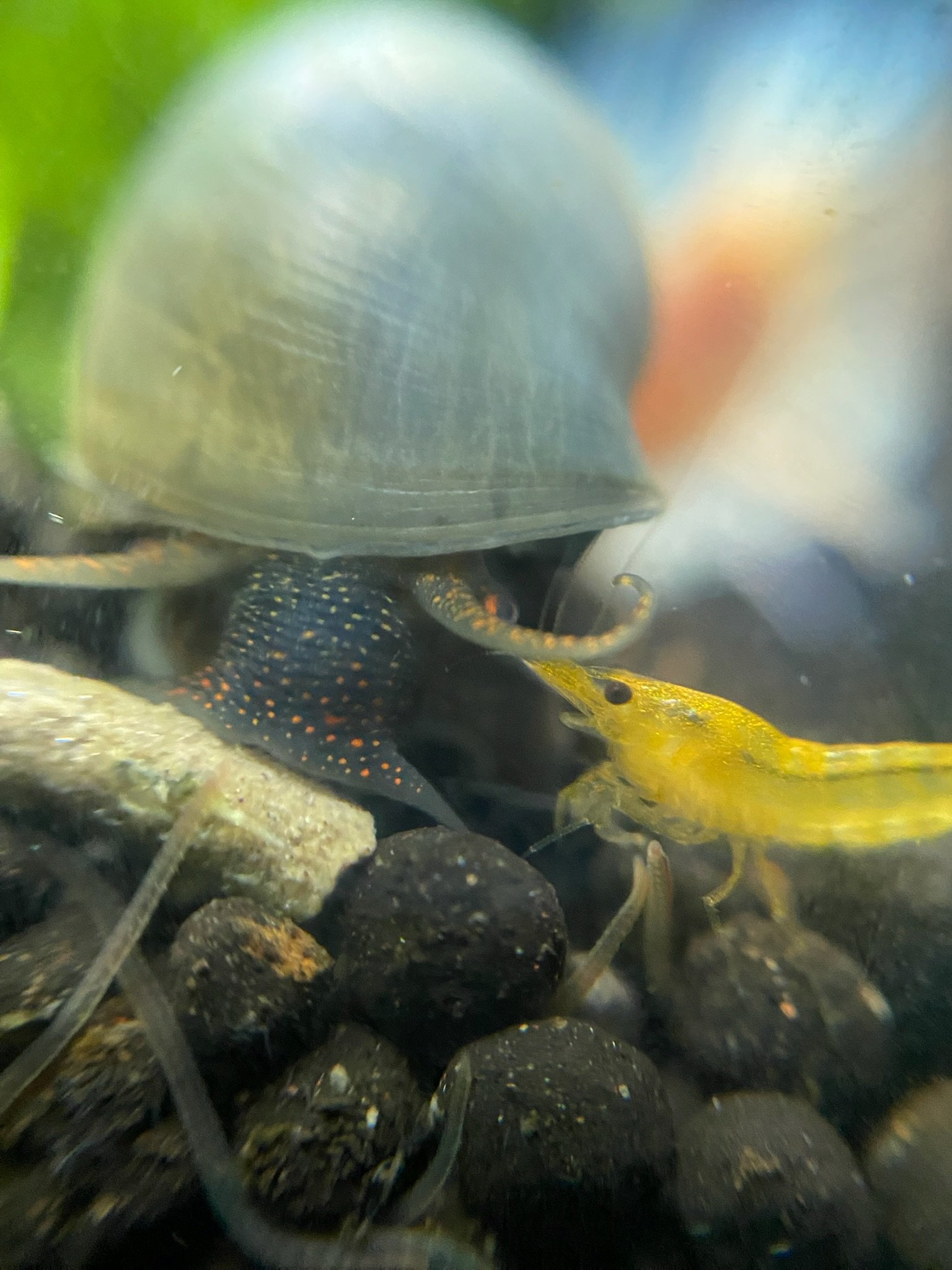
Tank Set up and Establishing the Aquarium
Like with Shrimp, Mystery Snails thrive in well-established aquariums with stable water conditions, plenty of surfaces to graze on, and areas to hide and rest. To achjeive this after the cycling process is complete leave the tank for another few weeks prefeably with the lights on a bit more than you would usually to build up small amounts of dust algae and give biofilm time to get going. If you notice hair algae immediately stop the excess light and manually remove it.
Tank Size: Minimum 20–30 litres per snail is ideal. Larger tanks are more stable and easier to maintain, especially for breeding or keeping multiple snails.
Substrate: Sand or fine gravel works best. Smooth surfaces protect their delicate foot and prevent shell damage.
Decor and Plants: Include rocks, driftwood, and live plants. Hardy plants like Java Moss, Anubias, or floating plants offer surfaces for grazing and hiding.
Filtration: Gentle filtration is preferred; strong currents can stress snails.
Established Tank: Ensure biofilm, algae, and microorganisms are present, which form a natural supplemental diet for your snails.
Water Parameters
Mystery Snails are hardy but sensitive to poor water quality and extremes in pH. Stability is more important than perfection.
Temperature: 20–28°C (room temp is fine)
pH: 7.0–8.0 (ideal 7.2–7.8)
KH/GH: Stable levels support shell growth
Ammonia/Nitrite: 0 ppm (snails are very sensitive)
Nitrate: <20 ppm
Providing stable water with regular maintenance, partial water changes, and gentle filtration will keep your snails healthy and active.
Feeding Mystery Snails
Mystery Snails are omnivores and grazers. They will eat biofilm, algae, and decaying plant matter in the tank but also benefit from supplemental feeding.
Staple Foods: High-quality snail pellets, sinking wafers, or algae-based foods
Moringa Powder: Mix a small amount into water and pour into nursery or breeder tanks to provide extra nutrients for juvenile and adult snails.
Vegetables: Blanched zucchini, spinach, and dark leafy greens
Calcium Sources: Cuttlefish bone, mineral blocks, or powdered calcium to maintain strong shells
Botanicals: Indian almond leaves or other safe plant matter make sure to not mske it too acidic
Occasional Treats: Small amounts of fruit are fine
A varied diet ensures healthy shell growth, active snails, and successful breeding.
Breeding
Adult snails reach maturity around 4–6 months.
Snails lay eggs above the waterline in clusters, often pink or orange, on tank walls or decorations.
Eggs take about 2–4 weeks to hatch, depending on temperature and humidity.
Only freshwater environments support the full life cycle — eggs outside water need to remain moist but not submerged.
Life Cycle
Egg Stage: Adult female Mystery Snails lay egg clutches above the waterline. Each clutch is often pink or orange and can contain dozens of eggs. Eggs typically take 2–4 weeks to hatch, depending on temperature and humidity.
Juvenile Stage: Once hatched, the snails are tiny and spend the majority of their early life as juveniles. During this time, they graze on biofilm, algae, and soft plant matter while growing and strengthening their shells. This juvenile period can last several months, during which proper nutrition, calcium supplementation, and safe hiding spaces are critical for survival and shell development.
Adult Stage: Mystery Snails reach maturity around 4–6 months, at which point females can start laying eggs themselves. Adults continue to graze and contribute to the ecosystem of the tank, maintaining algae and biofilm levels. With proper care, adults can live for 1–3 years, producing multiple generations over their lifetime.
By understanding these stages — eggs → juveniles → adults — hobbyists can better manage breeding, growth, and colony health, ensuring strong shells, vibrant colors, and high survival rates.
Tips for Heathy Growth and Breeding
Keep stable water parameters — sudden fluctuations harm eggs and juveniles.
Provide ample calcium for strong shells.
Avoid aggressive tankmates; some fish may harass or eat snails.
Maintain clean tanks with established biofilm and algae for grazing
For extra nutrition and improved survival rates, mix a small amount of moringa powder into water and gently pour it into the breeder boxes and nursery tanks. This provides juveniles with additional trace nutrients and encourages healthy growth.
Adding new snails from different breeders occasionally can help maintain genetic diversity and prevent colony weaknesses over time.
Final Notes
Mystery Snails are peaceful, colorful, and fascinating to watch. With a stable, established tank, proper diet, and calcium supplementation, they thrive in both breeding and display setups. Whether you’re keeping golden, blue, or panda varieties, this guide applies across all Pomacea species — making them perfect for beginner and experienced aquatic invertebrate hobbyists alike.